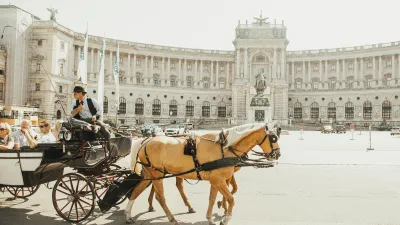
Home Austria Austria Cities Cities Vienna Vienna, the capital of Austria, is a city of extraordinary historical depth and cultural grandeur, celebrated for its imperial palaces, classical music heritage, and coffeehouse tradition. Straddling the Danube in the heart of Europe, it has long been one of the continent's most sophisticated metropolises, shaped by centuries of Habsburg rule and the creative energy of artists, architects, and composers. Gay and bisexual men have left a remarkable imprint on Vienna's history. Prince Eugene of Savoy, the military genius who broke the Ottoman siege of Vienna in the late seventeenth century, was widely known among his contemporaries to prefer the company of men in his private life, yet he thrived across the reigns of three emperors and left enduring monuments such as Schloss Belvedere. Emperor Charles VI, the last ruler served by Prince Eugene, reportedly shared a deeply intimate bond of nearly two decades with Count Michael Johann Althan III, and mourned his death publicly. The emperor's own younger brother Archduke Ludwig Viktor, nicknamed Luziwuzi, was famous at court for his wit and fondness for cross-dressing, and once caused a public uproar at the Centralbad swimming pool — a venue that survives today as the gay sauna Kaiserbründl. The State Opera itself was designed by the gay architect duo Eduard van der Nüll and August Sicard von Sicardsburg, while composer Franz Schubert lived for more than two years with the homosexual librettist Johann Baptist Mayrhofer, whose texts for Schubert's songs and their unfinished opera Adrast reflect the closeness of their bond. Today, the heart of Vienna's gay scene is concentrated along the Linke Wienzeile and Rechte Wienzeile, where the majority of gay bars and venues are found. The city's queer calendar is anchored by three major events: the Regenbogenball in winter, Vienna Pride and its Rainbow Parade each June, and Wien in Schwarz in October.
Cities Vienna Vienna, the capital of Austria, is a city of extraordinary historical depth and cultural grandeur, celebrated for its imperial palaces, classical music heritage, and coffeehouse tradition. Straddling the Danube in the heart of Europe, it has long been one of the continent's most sophisticated metropolises, shaped by centuries of Habsburg rule and the creative energy of artists, architects, and composers. Gay and bisexual men have left a remarkable imprint on Vienna's history. Prince Eugene of Savoy, the military genius who broke the Ottoman siege of Vienna in the late seventeenth century, was widely known among his contemporaries to prefer the company of men in his private life, yet he thrived across the reigns of three emperors and left enduring monuments such as Schloss Belvedere. Emperor Charles VI, the last ruler served by Prince Eugene, reportedly shared a deeply intimate bond of nearly two decades with Count Michael Johann Althan III, and mourned his death publicly. The emperor's own younger brother Archduke Ludwig Viktor, nicknamed Luziwuzi, was famous at court for his wit and fondness for cross-dressing, and once caused a public uproar at the Centralbad swimming pool — a venue that survives today as the gay sauna Kaiserbründl. The State Opera itself was designed by the gay architect duo Eduard van der Nüll and August Sicard von Sicardsburg, while composer Franz Schubert lived for more than two years with the homosexual librettist Johann Baptist Mayrhofer, whose texts for Schubert's songs and their unfinished opera Adrast reflect the closeness of their bond. Today, the heart of Vienna's gay scene is concentrated along the Linke Wienzeile and Rechte Wienzeile, where the majority of gay bars and venues are found. The city's queer calendar is anchored by three major events: the Regenbogenball in winter, Vienna Pride and its Rainbow Parade each June, and Wien in Schwarz in October.