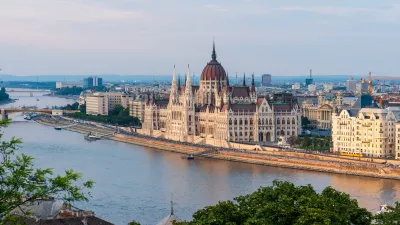
Home Hungary Hungary Cities Cities Budapest Budapest, the capital of Hungary, sits on the Danube and is one of the twenty most visited destinations in Europe. Its cityscape blends influences from many eras: Ottoman Turkey, Habsburg Vienna, industrial-age English engineering and the 'ruin chic' of post-communist Berlin. Highlights include Buda Castle Palace, the Parliament Building, Fisherman's Bastion, Matthias Church, the Széchenyi Chain Bridge, Andrássy boulevard and one of the oldest subway lines in the world, plus the now trendy 'ruin pubs'. The city is also famous for its many thermal baths in historic buildings, fed by springs that are plentiful thanks to a tectonic fault beneath the city and used since Roman and Turkish times. Queer life in Budapest is often seen through the lens of the right-wing nationalist turn in Hungary since the late 1990s. Viktor Orbán and his openly homophobic Fidesz party governed from 2010 until April 2026, but the reality is more nuanced. Homosexual acts were decriminalized as early as 1961, and in the 1980s Budapest was a magnet for gay travelers from the GDR and other countries in East and West. Budapest Gay Pride has taken place every year since 1997, and the city hosted the EuroGames, the big European LGBTQ sports event, in 2012. Public support for registered partnerships and same-sex marriage has risen markedly despite anti-queer propaganda. In 2025 the Orbán government tried to stop the Pride march altogether, but the Hungarian LGBTQ community, backed by the city of Budapest and by Hungarian and European civil society, answered with the largest Pride demonstration in the country's history. With over 1.7 million inhabitants, Budapest has a relatively small but lively gay scene today, ranging from bars and saunas to queer pop parties and progressive techno events.
Cities Budapest Budapest, the capital of Hungary, sits on the Danube and is one of the twenty most visited destinations in Europe. Its cityscape blends influences from many eras: Ottoman Turkey, Habsburg Vienna, industrial-age English engineering and the 'ruin chic' of post-communist Berlin. Highlights include Buda Castle Palace, the Parliament Building, Fisherman's Bastion, Matthias Church, the Széchenyi Chain Bridge, Andrássy boulevard and one of the oldest subway lines in the world, plus the now trendy 'ruin pubs'. The city is also famous for its many thermal baths in historic buildings, fed by springs that are plentiful thanks to a tectonic fault beneath the city and used since Roman and Turkish times. Queer life in Budapest is often seen through the lens of the right-wing nationalist turn in Hungary since the late 1990s. Viktor Orbán and his openly homophobic Fidesz party governed from 2010 until April 2026, but the reality is more nuanced. Homosexual acts were decriminalized as early as 1961, and in the 1980s Budapest was a magnet for gay travelers from the GDR and other countries in East and West. Budapest Gay Pride has taken place every year since 1997, and the city hosted the EuroGames, the big European LGBTQ sports event, in 2012. Public support for registered partnerships and same-sex marriage has risen markedly despite anti-queer propaganda. In 2025 the Orbán government tried to stop the Pride march altogether, but the Hungarian LGBTQ community, backed by the city of Budapest and by Hungarian and European civil society, answered with the largest Pride demonstration in the country's history. With over 1.7 million inhabitants, Budapest has a relatively small but lively gay scene today, ranging from bars and saunas to queer pop parties and progressive techno events.