
Spain
Cities
Alicante
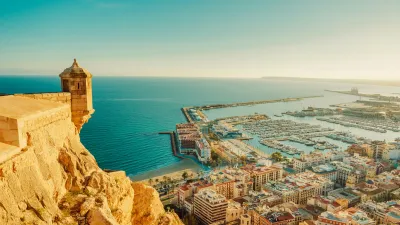
Alicante is a growing tourist city on Spain's Mediterranean coast, on the Costa Blanca south of Valencia. Around 330,000 people live here, and both Valencian, which is related to Catalan, and Spanish (Castilian) are spoken. The city's co-official Valencian name is Alacant. Its main sights include the Castillo de Santa Bárbara on Mount Benacantil, the palm-lined seafront promenade Explanada de España and the picturesque Santa Cruz quarter in the Old Town. The Museum of Contemporary Art in the Casa de La Asegurada holds a large collection of 20th-century works, including pieces by Picasso, Dalí and Miró. Food is another highlight, with traditional and modern Mediterranean cooking, a huge variety of rice dishes and regional wines. Queer life in Alicante is tied to the city's festival calendar. In June the Bonfires of Saint John (Fogueres de Sant Joan) fill the city with celebration, and in July Alicante Gay Pride (Orgullo LGBT de Alicante) is the main LGBTQ+ event of the year, a good moment to visit if you want to combine the beach-town atmosphere with the local gay community.
Barcelona
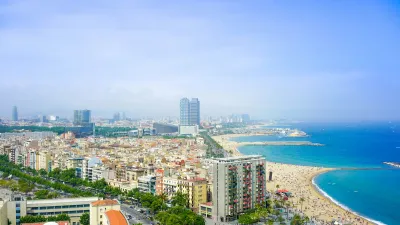
Barcelona has been one of Europe's favourite destinations for gay travellers for decades. The city pairs a warm Mediterranean climate with beaches in and near the city and mountains in the hinterland, along with the culture, nightlife, sights and infrastructure of a major European metropolis. It is known for its many fine examples of Catalan Art Nouveau architecture (Modernisme Català) and is also a good place to enjoy the modern design that blossomed after the end of the Franco dictatorship. The heart of Barcelona's gay scene is the Eixample district, nicknamed the Gayxample (Gaixample in Catalan), where most of the city's gay bars, hotels and shops are found. The main annual highlights for queer visitors are Barcelona Gay Pride in July and the Circuit Festival party weeks in August.
Bilbao
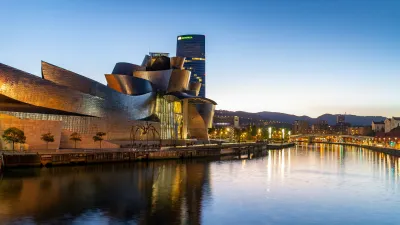
Bilbao, the largest city in the Basque Country, has gone from gritty industrial port to one of Spain’s most exciting cities. Frank Gehry’s titanium Guggenheim Museum, opened in 1997, sparked the transformation, and the riverside along the Nervión is now lined with striking modern architecture. The medieval Casco Viejo and its Siete Calles (Seven Streets) are the place for pintxos, the Basque take on tapas, best enjoyed standing at the bar with a glass of local txakoli. Wild beaches, clifftop hermitages and San Sebastián are all within easy reach. The gay scene is small and unpretentious, built around friendly social bars rather than big clubs. Most of the gay bars sit in the Casco Viejo, especially on Barrenkale and the nearby streets, and after the bars close the night carries on at El Balcón de la Lola, a short walk away. Nights start late, dress is casual, and since the gay bars share the same streets as the best pintxo spots, a whole evening rarely takes you more than a few blocks. nomadicboys Highlights of the year include Bilbao Bizkaia Harro (Pride) at the end of June, Zinegoak, the international LGBT film and performing arts festival running since 2004, and the huge Aste Nagusia fiesta in late August. Spain has had marriage equality since 2005, and Bilbao is a safe, welcoming city where gay travellers fit right in.
Gran Canaria
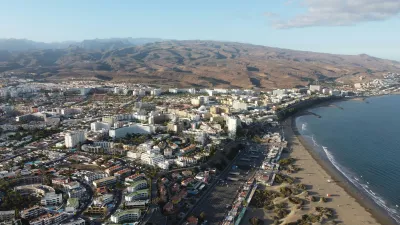
Gran Canaria is the third largest of the Canary Islands by area and the second largest by population. Geographically it lies closer to Africa than to mainland Spain. Its climate is shaped by the trade winds: the north is often cloudy, rainy and noticeably cooler, while the south, touched by dry winds from the Sahara, sees rain on only about 6 days a year and enjoys an 'eternal spring' with temperatures between 18 and 27°C. The landscape is just as varied, so much so that the island feels like a miniature continent. Within a small area you can find mountains and rock formations inland, fertile coastlines in the north, wide dune landscapes in the south and cliff coasts in the west. The sunny south is where most visitors, including many LGBTQ+ travellers, head to enjoy the reliably mild weather and the beaches.
Ibiza
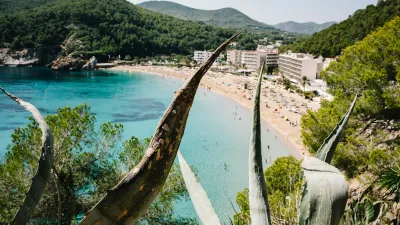
Ibiza is a Balearic island in Spain that began attracting dropouts and hippies in the 1960s and has since grown into one of Europe's most popular summer destinations. More than two million tourists visit every year, and the island's population has more than quadrupled since the 1960s to around 150,000, roughly a third of them in the capital, Eivissa (Ibiza Town). Catalan and Castilian Spanish are the official languages. The first visitors arrived back in the 1930s, among them Walter Benjamin, Raoul Hausmann, Le Corbusier and Walter Gropius, who drew inspiration from the cubic, single-story old farmhouses. The island's best-known sight is the old town of Ibiza Town, where the upper part, Dalt Vila, with its 14th-century cathedral and 16th-century Renaissance fortress walls, has been a UNESCO World Heritage Site since 1999. The lower old town is quiet by day but comes alive each summer night, drawing thousands of people to its small shops, restaurants and bars. Ibiza became a mecca for party tourists from all over Europe in the 1970s, and in summer international star DJs and newcomers play here. The house and techno scene, together with the island's hippie and dropout heritage, has helped make Ibiza a particularly gay-friendly destination for decades. The charming old town has a range of queer-inclusive bars, and some of the major clubs hold explicitly LGBT-friendly weekly parties. There are also several gay hotels on the island that welcome straight guests, and for some time now Ibiza has hosted an annual Gay Pride in June.
Madrid
Seville
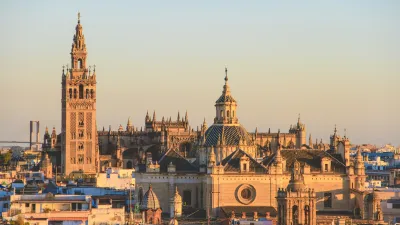
Seville is the capital of Andalusia and, with more than 700,000 inhabitants, the fourth largest city in Spain. Legend says the Greek demigod Heracles founded it, and later Julius Caesar built Hispalis on the spot. The Moors took over in 712 and brought a golden age of culture and trade that lasted until the Christian Reconquista in 1248. After Columbus reached the port in 1493, Seville became the hub of trade with the New World and grew immensely rich until Cádiz took over its monopoly in the 18th century. Most of the main sights lie within the narrow streets of the picturesque old town, including the Cathedral, the largest Gothic church in the world, whose tower, the Giralda, began as the minaret of a Moorish mosque. Nearby, the royal Alcázar is among the best preserved examples of Mudéjar architecture, blending Islamic design with Gothic and Renaissance styles. Seville is also considered the birthplace of tapas culture, so a visit to one of its many taverns is a must. The climate is the warmest in Spain, with short mild winters, very hot summers and long, pleasant springs and autumns. July and August are best avoided, as sightseeing in the midday heat is exhausting and the city empties as many Spaniards go on holiday. Because of the warm weather, going out in Seville is largely an open-air affair, and sometimes more happens in front of the bars than inside. This is especially true around the park along the Alameda de Hércules, a popular spot for a drink and a chat with friends. Bar follows bar here, and all of them are at least gay-friendly while the gay bars welcome straight guests, so the crowd is usually mixed and easy-going. Most of the talking and flirting happens in groups of friends who enjoy the company of one another and of open-minded strangers. If you are travelling alone or looking for more action, you can head on after midnight to the bars and clubs in the nearby streets. Nightlife is much quieter in July and August. The annual highlights include Holy Week (Semana Santa) in March or April, the Seville Spring Fair two weeks after Semana Santa, and Seville Gay Pride (Orgullo de Andalucía), usually held at the end of June.
Sitges
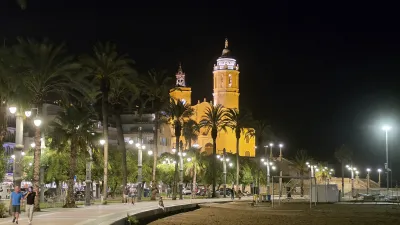
Sitges is a small, charming coastal town located around 35 kilometres south-west of Barcelona. It first gained cultural prominence in the late 19th century as a magnet for artists and a hub for Modernist and post-Art Nouveau architecture. During the 1960s, even under the conservative rule of the Franco dictatorship, it carved out a reputation as a centre of counterculture in Spain. Today, its economy revolves around upscale tourism, business events, and conferences, and the town has maintained a refined, relaxed atmosphere that sets it apart from the mass-tourism destinations that came to dominate much of Spain's coastline in the 1970s and 1980s. This distinctive character and pleasant ambience drew increasing numbers of gay visitors and expatriates over the decades, and by the 1990s Sitges had firmly established itself as one of Europe's premier gay hotspots. The warmer summer months of July and August in particular see the town fill with gay men arriving from across the continent, giving it a vibrant and welcoming energy. While it comes with a higher price tag than many comparable destinations, the quality of the experience and the strong sense of community make Sitges a standout choice for LGBTQ+ travellers seeking both relaxation and a lively social scene.
Torremolinos
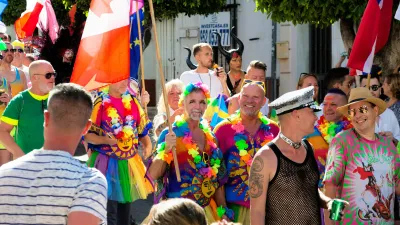
Torremolinos sits on the Costa del Sol in southern Spain. A century ago it was a small, picturesque fishing village; today it is one of the best-known holiday resorts on the Spanish coast, with a Mediterranean climate and kilometres of wide beaches. Its location also suits day trips to Andalusian cities such as Seville, Cordoba and Granada, and to Málaga, only ten kilometres away, with museums like the Museo Picasso and the new Centre Pompidou Málaga. At first glance the town is dominated by the hotel blocks of mass tourism, but a closer look rewards visitors. The tourism boom from the 1960s, still under Franco's dictatorship, brought modern architecture, design and a more liberal nightlife. The Hotel Pez Espada (1959/60), built in the "Relax" style, hosted international stars and was listed as a protected cultural asset in 2006. Other buildings of interest include the Centro Cultural Pablo Ruiz Picasso, the Art Deco inspired Bazar Aladino, the Palacio de Congresos y Exposiciones and the La Nogalera complex. Torremolinos has a special place in Spanish gay history. In the 1960s international tourism brought a relatively liberal, cosmopolitan and hedonistic atmosphere, attracting celebrities such as Jean Cocteau, Ava Gardner, Rock Hudson, Brigitte Bardot, Marlon Brando, John Lennon and Brian Epstein. Hippies and dropouts discovered the resort, and so did gay men, lesbians and trans people. That is why Spain's first gay bar, Tony's Bar, opened here in 1962, rather than in Madrid or Barcelona. Gay tourism became an economic factor and a source of foreign currency even during the dictatorship, but it also challenged the moral views of the authorities and police. In the early 1970s raids became more frequent, with hundreds of arrests and deportations of foreign tourists, and several bars were forced to close.
Valencia
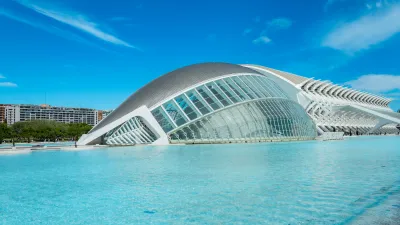
Valencia is Spain's third largest city, set right on the Mediterranean about 350 km south of Barcelona. It was once the country's gateway to the sea, and its history reaches back to 138 BC, when it was founded as a Roman colony. Visigoths, Moors, El Cid and the Crown of Aragon all left their mark, and in the 15th and 16th centuries it was a major commercial and financial center. Modernisme architecture, the Catalan take on Art Nouveau, shows in many facades, the railway station and the Central Market. After the devastating flood of 1957 the river Turia was diverted around the city, and the dry riverbed became the Jardin del Turia, a huge park with sports and leisure facilities. Next to it stands the City of Arts and Sciences by Valencia-born architect Santiago Calatrava, with an opera house and performing arts center, a science museum and Europe's largest aquarium. Beyond the cathedral and the silk exchange, this futuristic quarter has made the city ever more popular with visitors. You can also relax on the city beaches, eat paella in the dish's birthplace, or come in March for the Falles, a festival honoring Saint Joseph with fireworks, processions and giant papier-mâché and wood figures that are ceremonially burned at the end.